
Fragile Egg Challenge
Gentleness Activity
A small-group activity that helps kids practice choosing the right amount of strength for something fragile.
Why We're Doing This
Gentleness is not simply "use less strength." Sometimes strength helps. Sometimes strength needs balance. Sometimes strength needs control. Sometimes strength needs restraint. In this activity, kids compare three simple ways to carry a fragile object so they can practice noticing what kind of strength the moment needs.
You'll Need
- One hard-boiled egg, plastic fillable egg, or another safe fragile object per team
- Spoons
- Kitchen tongs or child-safe serving tongs
- Cups, trays, paper plates, towels, or other optional carrying tools
- Painter's tape or cones for marking a short path
- Wipes or paper towels if needed
A raw egg is never required. Choose the safest option for allergies, sanitation, room rules, and the children in front of you.
Get Ready
- Choose the fragile object before kids arrive. A hard-boiled egg or plastic egg is usually the best ministry-room option.
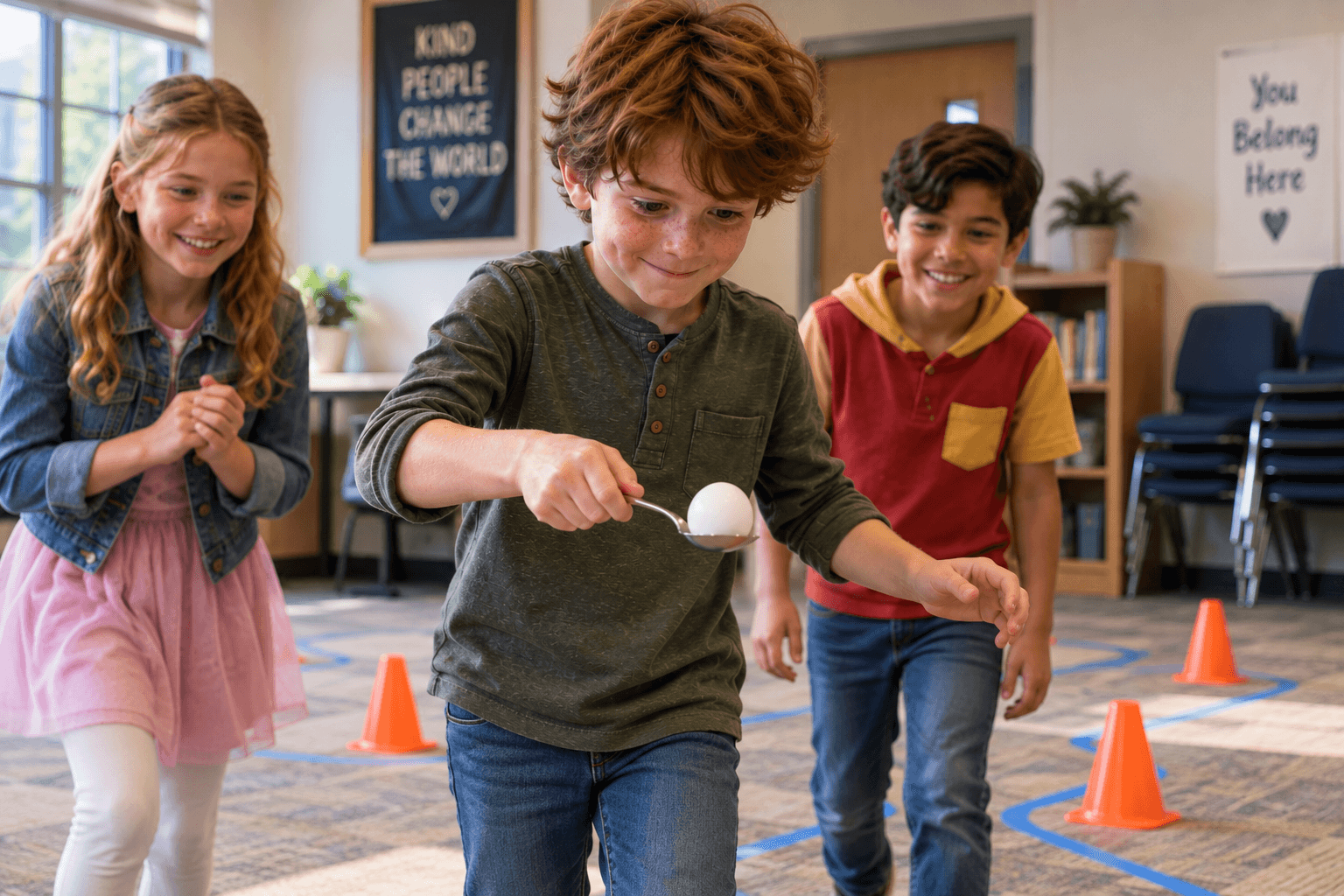
- Create a short path across the room, around a few cones, or across a tabletop. Keep it simple enough for two children to use meaningfully.
- Place the spoon, tongs, and optional tools where kids can see them.
- Decide whether kids will work individually, in pairs, or as one small team. The activity works best with two to twelve children.
- Remind yourself before starting: the goal is not speed or breaking the object. The goal is noticing what kind of care each situation needs.
What To Do
- Show the group the fragile object and say: "Gentleness is not just using less strength. Gentleness is paying attention and using the kind of strength the moment needs."
- Round 1 - Spoon: have kids move the egg or object through the short course using a spoon. Invite them to notice balance, slowing down, attention, and careful movement.
- Pause after Round 1 and ask: "Is strength helping much here? What happens if you rush? What do you need to pay attention to?"
- Round 2 - Tongs: have kids repeat the course using kitchen tongs or child-safe serving tongs. Explain that this round is about controlled pressure.
- Before they begin, say: "Too little pressure and the object may slip. Too much pressure and a truly fragile object could be damaged. We are finding the amount of pressure this object needs. We are not testing how hard we can squeeze."
- Round 3 - Choose Your Tool: offer a spoon, tongs, cup, tray, towel sling, paper plate, or another safe carrying option. Let kids choose the tool they think will work best and explain why.
- If time allows, change one condition for Round 3: make the route longer, add a tighter turn, require slower movement, have a partner give calm directions, or pass the object to another person.
- Gather everyone with the object and tools still visible. Transition by naming what happened: "The spoon required balance and patience. The tongs required just the right amount of pressure. Choosing a tool required paying attention to what the situation needed."
Keep each round short. This activity should still fit in about 10-15 minutes, even with a very small group.
Talk About It
- Which round was easiest for you? What made it feel easier?
- What happened, or what almost happened, when someone tried to go too fast with the spoon?
- With the tongs, what happened if you used too little pressure? What might happen if you used too much?
- How did you decide which tool to choose in Round 3?
- Did being gentle mean doing the exact same thing in every round? Why not?
- How can this help us understand gentleness with people, especially with our words, choices, and reactions?
- Older kids: Can you think of a time when being gentle takes more strength or self-control than reacting quickly?
Scripture Connection
In Matthew 19:13-15, people bring children to Jesus and the disciples try to stop them. Jesus notices the children in front of Him and responds with attention, welcome, and care. The passage is not teaching a lesson about tools or force; it shows Jesus receiving people instead of pushing them away. This activity helps kids practice one part of gentleness: paying attention to the person or moment in front of us.
Make It Work For Your Kids
- Seated participation: move the challenge to a tabletop course with a short route and visible tools.
- Non-carrying roles: invite kids to choose tools, give calm directions, observe balance or pressure, design the route, reset cones, or lead a reflection question.
- No-touch participation: let a child compare the tools visually or verbally, coach a teammate, or decide when the group should slow down.
- Reduced movement: use a shorter route, fewer turns, or a "move it across the table" version.
- Visual support: show the three rounds before starting and use simple picture or gesture cues for spoon, tongs, choose, pause, slow, and finish.
- Fine-motor alternatives: use larger easy-grip tongs, adaptive gripping tools, a cup, a tray, or a towel sling.
- Tongs alternative: skip the tongs round if gripping is difficult or uncomfortable, and discuss controlled pressure by watching the leader demonstrate.
- Sensory considerations: avoid raw eggs and strong smells; let children opt out of touching the object without opting out of the activity.
- Equivalent participation: describe every role as an important way to practice gentleness, not as a backup job.
Make It Easier
- Use a plastic egg or another sturdy pretend-fragile object.
- Shorten the route to a few steps or one tabletop transfer.
- Use only Round 1 - Spoon and Round 3 - Choose Your Tool.
- Let kids practice before adding any challenge or time limit.
- Use larger tongs, a tray, or a cup for children who need a more stable tool.
- Work as one small team so everyone can watch, coach, and talk together.
Make It Harder
- Compare more tools and ask which one required balance, pressure, teamwork, or restraint.
- Let kids design the route and explain how the route changes the kind of gentleness needed.
- Add a partner handoff where both children must slow down and communicate.
- Have one child carry while another gives calm directions.
- Ask older kids to predict which tool will work best before testing it.
- After each round, have kids explain which kind of control the tool required.
Do not turn this into a competitive race. The focus is gentleness, control, attention, and judgment--not speed.
Family Connection
Send kids home with one simple sentence: Gentleness is wise, attentive, controlled strength. Invite families to ask, "Where did you have to slow down, use self-control, or choose a softer response today?"